

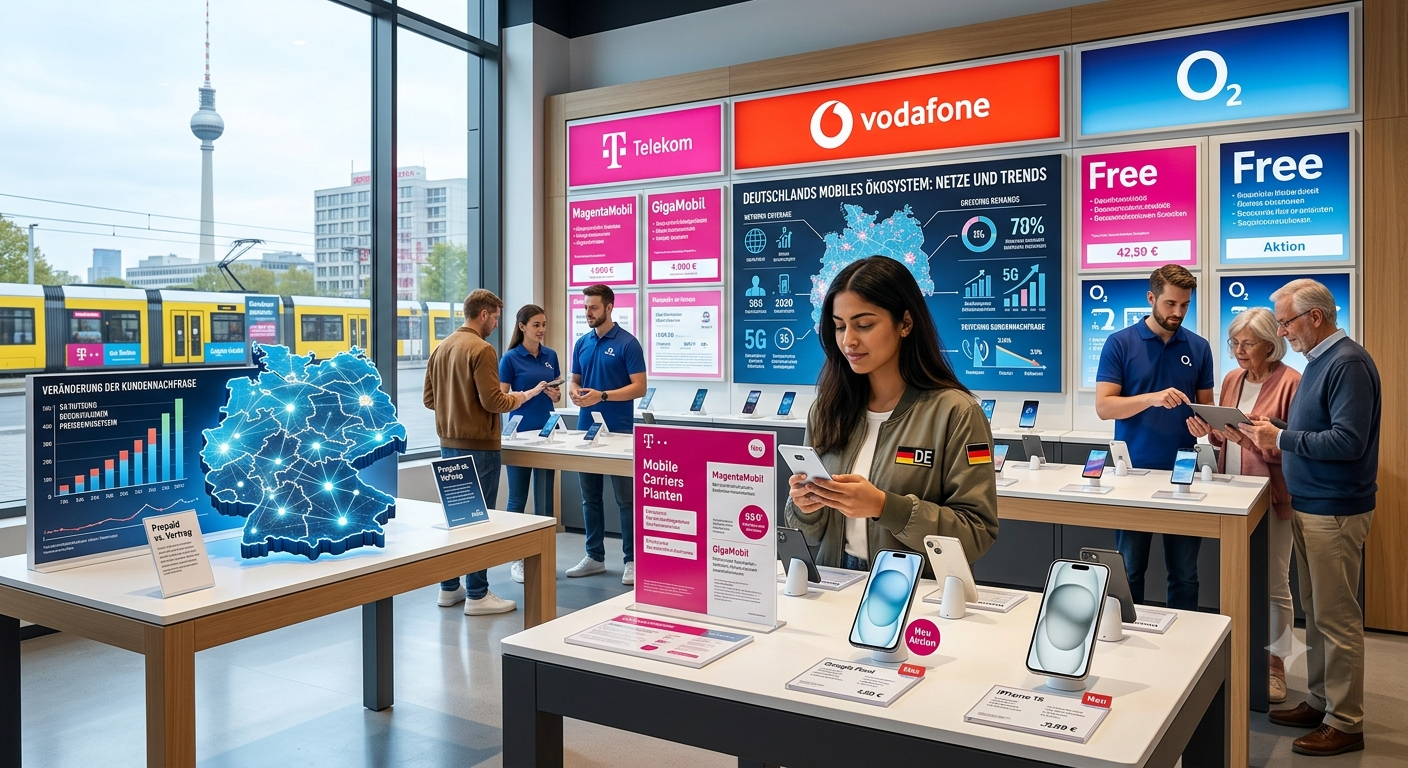
Germany's mobile industry is going through a change in 2026. Network operators are working hard to build 5G Standalone networks. At the same time, smartphone brands are trying to win over customers who want more expensive phones and are interested in artificial intelligence.
Berlin, Germany. September 2026: Germany's mobile industry is going through a change in 2026. Network operators are working hard to build 5G Standalone networks. At the same time, smartphone brands are trying to win over customers who want more expensive phones and are interested in artificial intelligence. These changes show that Germany remains one of Europe's most advanced mobile markets.
A Crowded Network Market
For years, Germany's mobile network market was shaped by three big players. That started to change when United Internet entered as a full network operator. After securing its 5G spectrum and building its own infrastructure, it began offering services that challenged the existing players. This new competition has pushed prices down in the budget and mid-tier phone plans. Consumers now have more options than they have had at any time in the last ten years.
At the same time, Deutsche Telekom is not standing still. It keeps looking for ways to grow beyond cell towers and cables. At Mobile World Congress 2026, the company announced a collaboration with Starlink. The goal is to use satellite technology to provide coverage in rural and remote areas of Europe. Services are expected to launch in 2028. This step shows how the telecom industry is shifting—blending ground-based networks with space-based ones to reach areas where regular signals don’t work.
5G Standalone Moves Into a New Phase
I have seen network competition get tougher and the growth of Germanys network becomes more noticeable. Carriers are now pushing harder into 5G Standalone deployment, a change that is expected to unlock advanced use cases such as cloud gaming, augmented reality and low‑latency enterprise applications. Industry analysts note that this transition marks a shift from speed upgrades, toward network features that support entirely new categories of mobile services.
Smartphone Demand Shifts Toward High-End Models
On the device side Germany is still a mature and price-tolerant market. Consumer spending has moved toward higher-end smartphones even though the growth in the number of units sold is still small. Buyers are more willing to pay more for processors, better cameras and longer battery life. About half of smartphone buyers now say that AI-driven features, such, as computational photography and smarter voice assistants directly influence their decisions when they buy a new phone.
In Germany Android is still the operating system. Samsung remains the brand of devices with Apple close behind especially among young people and those who spend a lot of money. Xiaomi has moved into place by giving people phones that have high‑end features, such as smart camera systems and quick charging but at prices that are much lower, than those of Samsung and Apple. That approach fits well with the habit of looking for good value.
How Sustainability finding space in market?
Sustainability is finding its space in the market. While premium and value options dominate a smaller but clear group is forming around eco-friendly made devices. Companies, like Fairphone have created a following by selling phones that can be repaired built with ethically sourced materials and supported with software for years. This approach doesn’t work everywhere. It keeps growing in Germany. Meanwhile local companies and experts focused on managing business devices and offering clean software are also making a name for themselves. They’re holding their ground beside the international brands.
What Will Happen Next With the Market
Experts think that the mobile industry in Germany will keep increasing in value of in the number of devices sold during the rest of this decade. The prices that people pay for their phones are expected to go up because people are keeping their phones longer before replacing them. Also the phone networks are moving more towards using 5G on its own and on using coverage from satellites to help. There are four phone companies competing with each other. The market for phones is led by Android devices. More people are interested in both high-end phones and phones that're good for the environment. Because of these things the mobile world in Germany is going into a time that's more divided and more full of competition than it has been, for many years.