

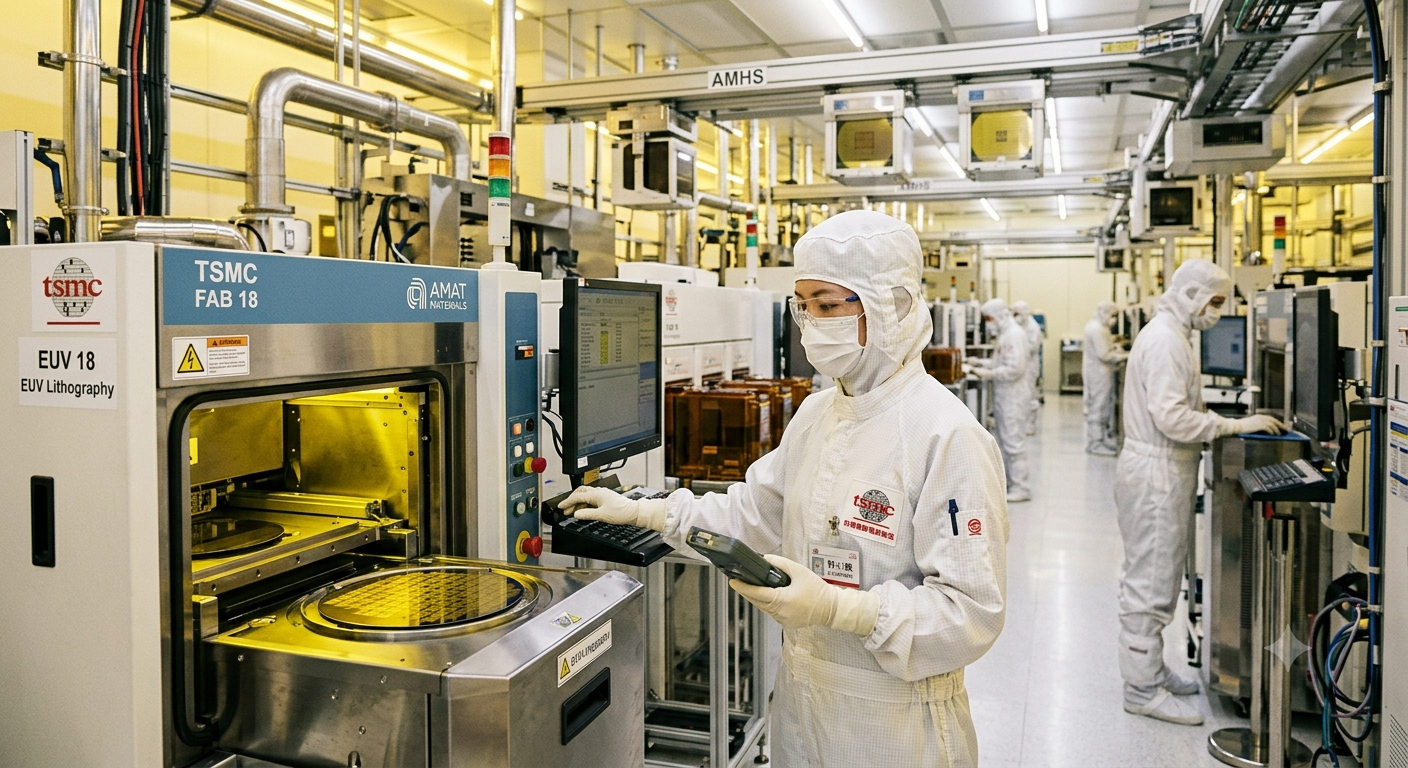
Taiwan Semiconductor Manufacturing Company (TSMC) pioneered the pure-play semiconductor foundry model by focusing on manufacturing chips designed by other companies. Founded in 1987, TSMC built its position through advanced process technology, large-scale manufacturing, customer partnerships, and continuous investment in research and development. Its strategy has allowed it to serve major markets including high-performance computing, smartphones, automotive, and artificial intelligence.
Introduction
Taiwan Semiconductor Manufacturing Company (TSMC) pioneered the pure-play semiconductor foundry model by focusing on manufacturing chips designed by other companies. Founded in 1987, TSMC built its position through advanced process technology, large-scale manufacturing, customer partnerships, and continuous investment in research and development. Its strategy has allowed it to serve major markets including high-performance computing, smartphones, automotive, and artificial intelligence.
Company Background
1. From Foundry Concept to Global Business
TSMC was established in 1987 by Dr. Morris Chang and pioneered a business model focused exclusively on manufacturing customers' semiconductor designs. By remaining a manufacturing partner rather than developing competing branded chips, TSMC created a model that supported the growth of the global fabless semiconductor industry.
2. Continuous Process Technology Development
TSMC invested continuously in internal research and development to improve semiconductor manufacturing. Its technology development progressed from early micrometer processes to advanced nodes including 90nm, 65nm, 40nm, 28nm, 16/12nm, 7nm, 5nm, and 3nm technologies. This long-term technology focus became an important part of its competitive position.
3. Expansion into Advanced Manufacturing
TSMC expanded its capabilities as demand increased for high-performance and energy-efficient chips. In 2025, the company manufactured 12,682 products using 305 technologies for 534 customers, while advanced technologies of 7nm and below accounted for 74% of total wafer revenue.
Market Opportunity
Growth of Advanced Semiconductors
The increasing use of AI, high-performance computing, smartphones, automotive electronics, and connected devices has increased demand for advanced semiconductor manufacturing. TSMC's 2025 annual report identified strong AI-related demand and continued demand for advanced technologies across HPC, smartphones, automotive, and IoT applications.
Demand for Advanced Process Technologies
As semiconductor companies develop increasingly powerful and energy-efficient products, demand has shifted toward advanced manufacturing processes. TSMC's 3nm technology represented 24% of total wafer revenue in 2025, while its 2nm technology entered high-volume manufacturing in the fourth quarter of 2025.
Growing Need for Manufacturing Capacity
The semiconductor industry requires large investments in fabrication facilities, equipment, research, and process development. This creates opportunities for specialized foundries that can provide advanced technology and manufacturing capacity to multiple chip designers. TSMC's manufacturing facilities exceeded 17 million 12-inch equivalent wafers of annual capacity in 2025.
Challenges
TSMC has faced the challenge of continuously developing more advanced manufacturing technologies while maintaining high yields and reliable production. It also needed to invest heavily in fabrication capacity, respond to rapidly changing demand, support increasingly complex chip designs, and expand manufacturing beyond Taiwan while maintaining quality and customer confidence.
Solution
TSMC responded by combining continuous process innovation with large-scale manufacturing and a customer-focused foundry model. The company invested heavily in advanced nodes, specialized technologies, advanced packaging, manufacturing capacity, and global facilities. This approach allowed customers to access leading manufacturing capabilities without building their own advanced semiconductor fabs.
Implementation Approach
TSMC implemented its strategy through continuous R&D, technology development, manufacturing expansion, and close customer support. The company expanded advanced 3nm and 2nm production, increased advanced packaging capacity, and developed manufacturing operations in Taiwan, the United States, Japan, and Europe. Its 2025 operations included 305 process technologies and 534 customers.
Major Technology Milestones
1. Advanced Process Nodes: Progressed from early technologies to leading-edge 7nm, 5nm, 3nm, and 2nm processes.
2. FinFET Technology: Improved transistor performance and power efficiency.
3. 3nm Technology: Supported advanced computing and AI applications.
4. 2nm Technology: Entered high-volume manufacturing in 4Q 2025.
5. Advanced Packaging: Supported increasingly complex and high-performance chip designs.
6. Global Manufacturing: Expanded production capabilities across Taiwan, the United States, Japan, and Europe.
Results
TSMC's strategy has produced strong technological and financial results. In 2025, revenue increased 35.9% in U.S.-dollar terms, while advanced technologies accounted for 74% of total wafer revenue. TSMC also manufactured 12,682 products for 534 customers. In the first quarter of 2026, revenue reached US$35.90 billion, up 40.6% year over year.
Key Takeaways
· Focus on a clear business model.
· Invest consistently in advanced technology.
· Build long-term customer relationships.
· Scale manufacturing with market demand.
· Combine technology leadership with reliable execution.
Conclusion
TSMC became a leading semiconductor foundry by building a specialized business model around customer manufacturing, continuous technology development, and large-scale production. Its investment in advanced process technologies, packaging, manufacturing capacity, and global operations helped it serve increasingly complex semiconductor applications. Strong growth in advanced technologies and AI-related demand has further strengthened its position. TSMC's case demonstrates how a focused business model, sustained R&D investment, manufacturing scale, and customer trust can create a durable competitive advantage in a highly complex technology industry.